Spine Mobility: The Segment-by-Segment Guide to a Back That Moves Well
The spine isn’t one joint — it’s a stack of segments with different jobs, and modern life stiffens exactly the ones that should move while destabilizing the ones that shouldn’t. The segment-by-segment guide: the map, the daily routine and the thoracic rescue.

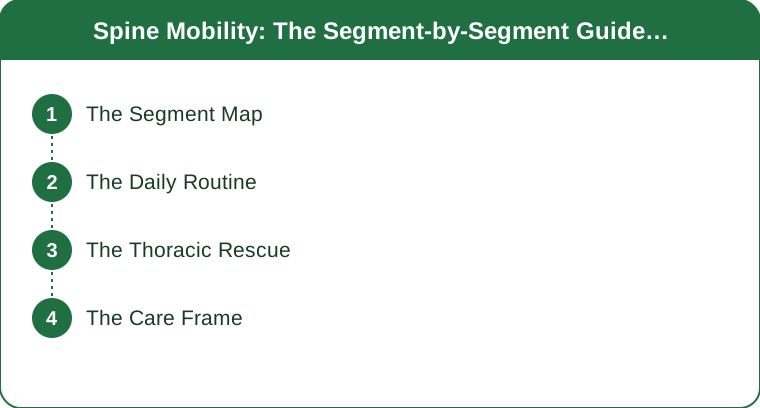
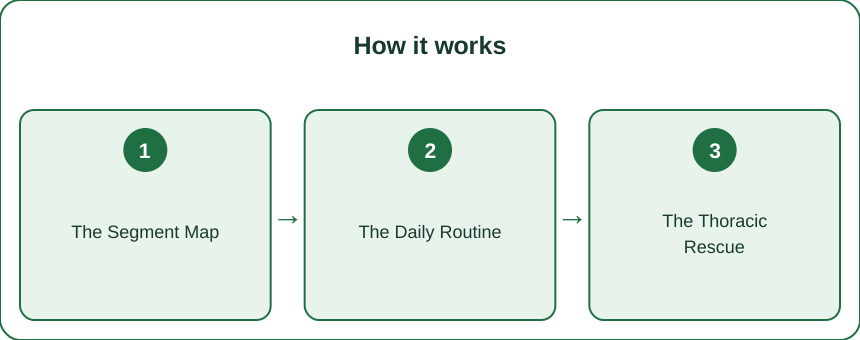
The Segment Map
Who should do what: the thoracic truth (the mid-back built for rotation and extension — the desk era’s stiffest victim; the segment where most ‘tight back’ complaints actually live), the lumbar clarification (the lower back preferring STABILITY over big motion — the core doctrine’s brace territory; the lumbar forced to move because the thoracic won’t being the classic injury pattern), the cervical note (the neck’s mobility serving vision-and-life — the tech-neck stiffness from the neck chapters; the gentle-range tier), the joint-by-joint logic (the alternating mobile-stable pattern up the body — the ankle-knee-hip-lumbar-thoracic chain from the mobility doctrine; the stiff segment always taxing its neighbors), and the diagnosis reframe (the lower-back ache that’s often a thoracic-and-hip mobility bill — the fix living above and below the pain per the compensation doctrine).
The Daily Routine
The eight-minute spine circuit: the cat-cow opener (the segmental flexion-extension wave — the slow, vertebra-by-vertebra intention over the fast rock; the spine’s roll call), the thoracic rotations (the quadruped thread-the-needle and the open-book side-lying rotation — the 8-per-side staples; the breath-timed rotations that go further), the extension work (the foam-roller thoracic extensions — the roller across the mid-back, the gentle over-arch; the prone press-up tier for the flexion-heavy life), the side-bending gap (the standing and kneeling side reaches — the frontal-plane motion daily life never asks for; the QL-and-lat opening from the side-body doctrine), the segmental control piece (the pelvic tilts and the slow spinal rolls — the articulation skill from the pilates chapters; the control that makes range useful), and the sequencing note (the routine as morning-stiffness cure or pre-training prep — the anchor placement per the habit doctrine).

The Thoracic Rescue
The desk-era priority: the why-thoracic-first case (the segment whose stiffness taxes neck, shoulders AND lower back — the one-fix-three-benefits target; the overhead-mobility and posture chapters both tracing here), the desk-hour counters (the hourly extension-over-chair-back move — the chair as mobility equipment; the doorway-and-wall rotations as meeting-break snacks per the desk doctrine), the strength pairing (the rows and pull-aparts that hold the mobility — the posture-strength doctrine; the range strengthened being the range kept), the breathing connection (the rib-cage mobility feeding the breath — the 360-breathing from the breathwork chapters needing thoracic movement; the stiff mid-back as a shallow-breath accomplice), and the progress markers (the wall-rotation test and the reach-behind checks — the monthly retest from the tracking doctrine; the overhead reach that stops arching the lower back being the win).
The Care Frame
The spine in perspective: the motion-is-lotion reassurance (the moving spine being the healthy spine — the movement-fear from old pain retired per the back-pain doctrine; the gentle daily motion as maintenance, not risk), the pain-versus-stiffness sorting (the stiffness that eases with movement being the green light — the sharp, radiating or persistent pain being the professional tier per the red-flag doctrine), the age honesty (the spine mobility maintainable at every decade — the use-it-or-lose-it law from the aging chapters; the routine that’s more valuable at 60 than 30), the integration note (the spine work woven into existing practice — the yoga flows, the pilates articulation and the warm-up slot all counting; the standalone routine for the practice-less), and the payoff close (the back that rotates for the tennis serve, extends for the overhead press and side-bends for the reach — the daily life that stiffness had quietly shrunk, reopened segment by segment; the stack, moving as designed). Cat-cow daily, rotate the mid-back, stabilize the lower: the spine, segmented and served.
The mid-back should move and the lower back should stabilize — modern life inverts both. Eight daily minutes: cat-cow, thoracic rotations, roller extensions and side bends, with rows to keep the range.
Keep Reading
This article is for general informational purposes only and is not medical advice. Always consult a qualified health professional for guidance specific to you.