Reaching Overhead Shouldn't Be a Story: Shoulder Mobility Restoration
Test right now: arms straight overhead, biceps by ears, ribs down. If the arms angle forward, the back arches, or something files a complaint — the overhead reach has quietly stiffened, as desk-era shoulders do. Restoring it takes three tools and borrowed patience.

Where Overhead Goes
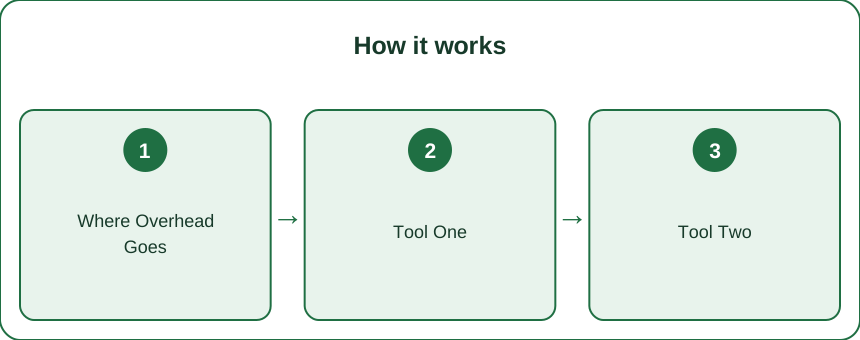
The reach is a team event: shoulder joints, shoulder blades AND upper back all contribute degrees. Desk posture stiffens the thoracic spine and shortens the front — the shoulders then fake overhead by arching the lower back (the compensation your test just revealed).
Tool One: the Wall Slide
Back against wall, arms in goalpost, slide up and down keeping wrists and elbows wall-adjacent (they will want to leave — that gap IS the restriction). Ten slow reps daily: part measurement, part treatment, entirely humbling on day one.

Tool Two: the Hang
The dead hang decompresses and re-teaches the shoulder blade’s upward glide — accumulate 30-60 seconds daily (feet-assisted counts fully). The overhead reach’s missing degrees frequently live in a shoulder blade that forgot how to rotate up; hanging reminds it.
Tool Three: the Thoracic Assist
Foam roller under the upper back, gentle extensions over it, plus thread-the-needle rotations — the upper spine supplying its share so the shoulders stop over-drawing theirs. The trio together, ten minutes daily: overhead returns in weeks, and the top shelf becomes just a shelf again.
Wall slides for honesty, hangs for the blade, roller for the spine’s share. Overhead was a three-part chord the desk detuned one string at a time — ten minutes a day retunes all three.
Keep Reading
This article is for general informational purposes only and is not medical advice. Always consult a qualified health professional for guidance specific to you.