Why Stretching Harder Doesn't Fix a Mobility Restriction That's Actually Coming From the Joint Itself
Stretching harder or longer on a stubborn mobility restriction sometimes produces no improvement at all, and that’s often because the restriction isn’t coming from a tight muscle in the first place — it’s coming from the joint structure itself, which stretching was never going to change.

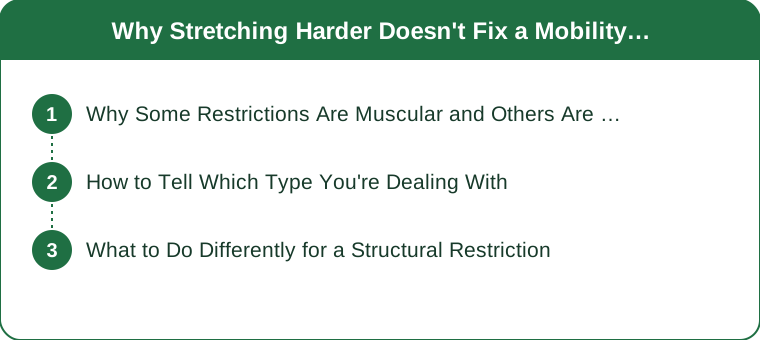
Why Some Restrictions Are Muscular and Others Are Structural
The distinction: the muscular-restriction-comes-from-tissue-tightness-that-genuinely-lengthens-with-consistent-stretching-while-a-structural-restriction-comes-from-bone-shape-or-joint-capsule-limits (a muscular restriction coming from soft tissue tightness that genuinely responds to and lengthens with consistent stretching over time, while a structural restriction comes from the actual bone shape, joint capsule, or ligament limits at that joint, a physical ceiling that stretching doesn’t change, per the mobility-versus-flexibility-guide logic — the muscular-restriction-coming-from-soft-tissue-tightness-that-genuinely-lengthens-with-consistent-stretching-while-a-structural-restriction-comes-from-actual-bone-shape-or-joint-capsule-limits-a-physical-ceiling-stretching-doesnt-change), and the reframe (two genuinely different categories of restriction being lumped together under one general stretching approach)).

How to Tell Which Type You’re Dealing With
The test: the a-restriction-that-produces-a-hard-abrupt-stop-rather-than-a-gradual-stretching-sensation-usually-points-to-a-structural-limit (a restriction that produces a hard, abrupt stop in the joint’s range, rather than a gradual pulling or stretching sensation building up to it, usually pointing toward a structural, joint-based limit rather than a muscular one, per the hip-mobility-desk-workers logic — the a-restriction-that-produces-a-hard-abrupt-stop-rather-than-a-gradual-pulling-sensation-usually-pointing-toward-a-structural-joint-based-limit-rather-than-a-muscular-one), and the frame (the quality of the end-range sensation itself being the practical clue for which category applies)).
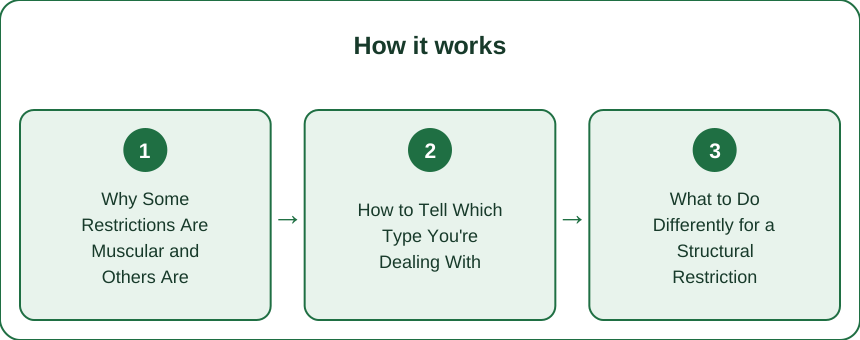
What to Do Differently for a Structural Restriction
The alternative approach: the focus-on-strengthening-and-controlling-the-available-range-rather-than-continuing-to-chase-more-range-through-stretching (shifting focus toward strengthening and improving control within the range that’s actually available, rather than continuing to chase additional range through more stretching that a structural limit won’t yield to, per the shoulder-mobility-overhead logic — the shifting-focus-toward-strengthening-and-improving-control-within-the-range-thats-actually-available-rather-than-continuing-to-chase-additional-range-through-more-stretching), and the frame (working within a structural ceiling, rather than pushing against it indefinitely, being the more productive path forward).
A muscular restriction comes from soft tissue tightness that genuinely lengthens with consistent stretching over time, while a structural restriction comes from the actual bone shape, joint capsule, or ligament limits at that joint, a physical ceiling stretching was never going to change, and a restriction that produces a hard, abrupt stop rather than a gradual stretching sensation usually points toward that structural category. Shifting focus toward strengthening and improving control within the range that’s actually available, rather than continuing to chase more range through stretching, is the more productive path once a restriction turns out to be structural rather than muscular.
Keep Reading
This article is for general informational purposes only and is not medical advice. Always consult a qualified health professional for guidance specific to you.